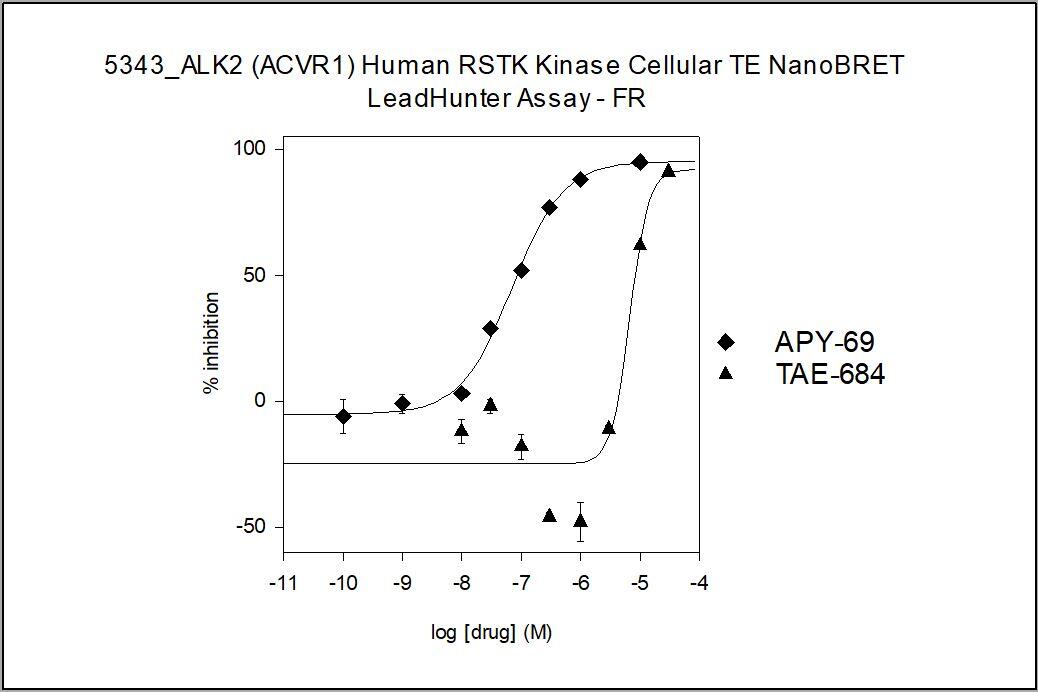
ALK2 (ACVR1) Human RSTK Kinase Cellular TE NanoBRET LeadHunter Assay - FR
OVERVIEW
DOCUMENTS/REFERENCES
Biological Information
Background Information:
The NanoBRET™ Target Engagement (TE) Intracellular Kinase Assays are based on the Bioluminescence Resonance Energy Transfer (BRET) system, an energy transfer technique designed to measure molecular proximity in living cells. The assay measures the apparent affinity of test compounds by competitive displacement of the NanoBRET™ tracer, reversibly bound to a NanoLuc® luciferase-kinase fusion expressed in cells.
Family:
Kinase
Sub Family:
RSTK
Class:
Protein Ser/Thr
Protein Name:
ALK2
Uniprot Number:
Q04771
Protein Aliases:
Activin receptor type I|ACTR-I|Activin receptor-like kinase 2|ALK-2|Serine/threonine-protein kinase receptor R1|SKR1|TGF-B superfamily receptor type I|TSR-I
Gene Name:
ACVR1
Gene ID:
90
Gene Aliases:
FOP| ALK2| SKR1| TSRI| ACTRI| ACVR1A| ACVRLK2
Accession Number:
NM_001111067
Organism:
Human
Construct Details:
NanoLuc® luciferase fused to the C-terminus of the Wild Type Full-length kinase
Cell Type:
293H
Assay Information
Assay Type:
Functional
Assay Sub Type:
Cell Based Binding
Functional Mode:
Antagonist
Detection Method:
NanoBRET
Testing Information
Procedure Summary:
NanoBRET TE Intracellular Kinase Assays are performed according to Promega Adherent Format Assay Protocol using NanoBRET™ Tracer K-11. 293H cells are transfected with ACVR1-NanoLuc® Fusion Vector, seeded in 384-well plates, and cultivated overnight. Target engagement of compounds are measured by treating the cells with the compound in presence of a fixed concentration of fluorescent tracer.
Tracer:
K-11 (0.068 µM)
Incubation:
120 min at 37°C
Test Sample Requirements:
Minimum 1) Dose Response: 120 µL of 10 mM stock -OR- 1 mg (pre-weighed) for a top concentration at 30 µM)
Turnaround Time
Standard:
15 Business Days
Reference Compound Data
Additional Information
Brand:
LeadHunter
Testing Location:
France - Celle L'Evescault
Questions? Contact Us
You can easily get in touch with a Eurofins Discovery Expert or get help from our Customer Service team. Reach out with questions, or to discuss your specific discovery challenges.
