H2 Human Histamine GPCR Cell Based Agonist cAMP LeadHunter Assay - TW
OVERVIEW
DOCUMENTS/REFERENCES
Biological Information
Background Information:
Histamine receptors belong to the superfamily of G protein-coupled seven transmembrane proteins. G-protein-coupled receptors constitute one of the major signal transduction systems in eukaryotic cells. Coding sequences for these receptors, in those regions believed to contribute to the agonist-antagonist binding site, are strongly conserved across mammalian species. Histamine receptors are found in most peripheral tissue and within the central nervous system.
Family:
GPCR
Sub Family:
Histamine
Class:
Class A
Protein Name:
H2
Uniprot Number:
P25021
Protein Aliases:
HH2R|Gastric receptor I
Gene Name:
HRH2
Gene ID:
3274
Accession Number:
XM_005265904
Organism:
Human
Construct Details:
Full Length, Recombinant
Cell Type:
CHO-K1
Assay Information
Assay Type:
Functional
Assay Sub Type:
Cell Based
Functional Mode:
Agonist
Detection Method:
TR-FRET
Measured Response:
Fluorescence
Testing Information
Incubation:
10 min at 37°C
Control Activator:
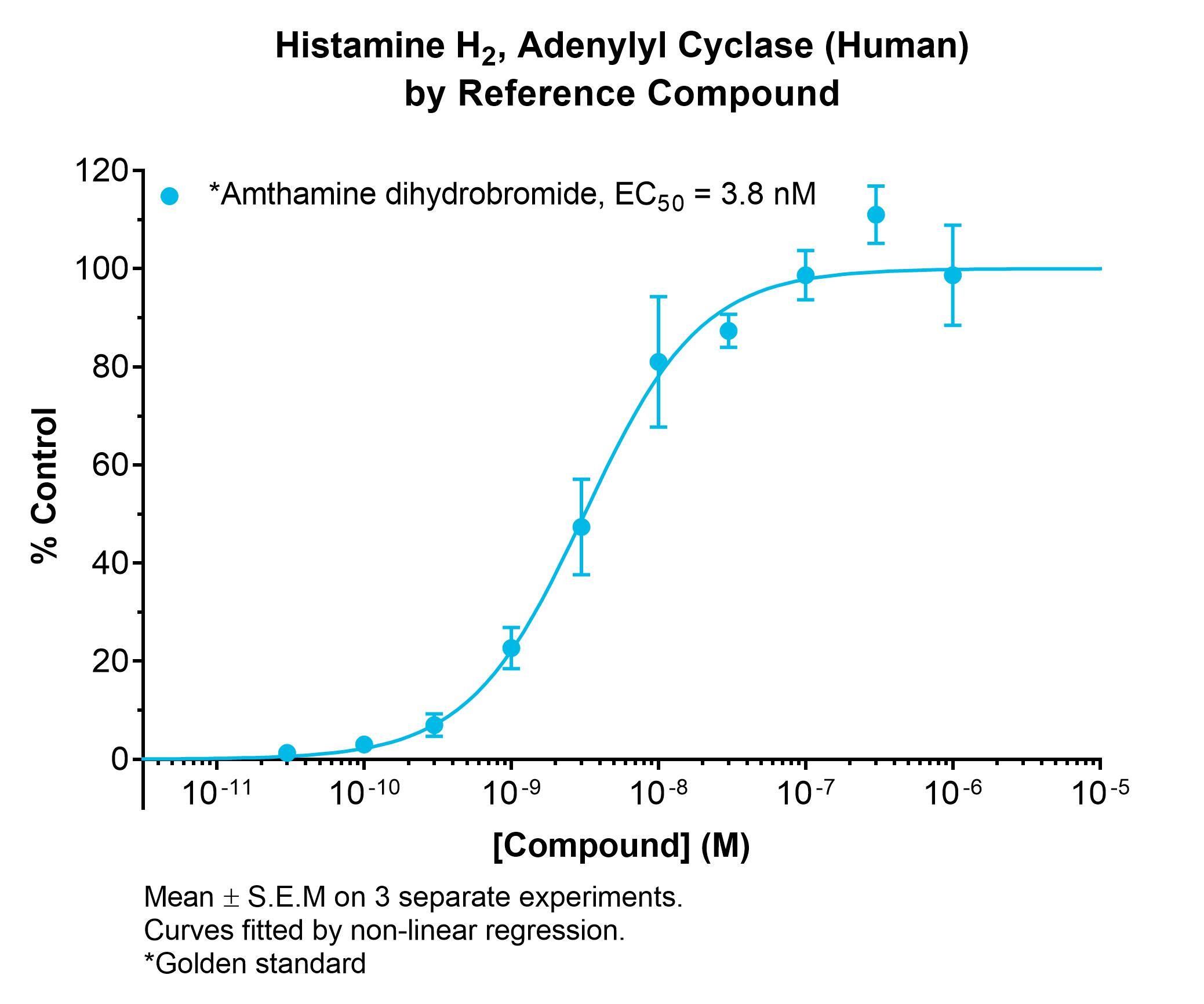
Amthamine dihydrobromide
Criteria For Significance:
≥ 50% increase in cAMP relative to Amthamine dihydrobromide response, ≥ 50% Inhibition of Amthamine dihydrobromide-induced cAMP decrease
Test Concentration / Dose:
Compounds are screened at 10, 3, 1, 0.3, 0.1, 0.03, 0.01 and 0.003 μM
Test Sample Requirements:
75 μl of 10 mM stock or 1 mg (pre-weighed) powder (assuming FW ≦500 and purity 100%)
Minimum Order Quantity:
16
Turnaround Time
Standard:
20 Business Days
Reference Compound Data
Clinical Relevance
Therapeutic Area:
Gastroenterology
Adverse / Beneficial Action:
Histamine H2 receptor antagonism is used primarily in the treatment of peptic ulcers and gastroeosophageal reflux disease (GERD); reduction of gastric acid secretion may alter bioavailability and rate of absorption of some therapeutic agents.
Additional Information
Brand:
LeadHunter
Testing Location:
Taiwan - Taipei
RELATED SOLUTIONS
H2 Human Histamine GPCR Cell Based Agonist & Antagonist cAMP LeadHunter Assay - TW
Item: 331250
H2 Human Histamine GPCR Cell Based Antagonist cAMP LeadHunter Assay - TW
Item: 331250-1
H2 Human Histamine GPCR Binding Antagonist Radioligand LeadHunter Assay - TW
Item: 239710
Questions? Contact Us
You can easily get in touch with a Eurofins Discovery Expert or get help from our Customer Service team. Reach out with questions, or to discuss your specific discovery challenges.
