Acetylcholinesterase Human Enzymatic LeadHunter Assay - FR
OVERVIEW
DOCUMENTS/REFERENCES
Biological Information
Background Information:
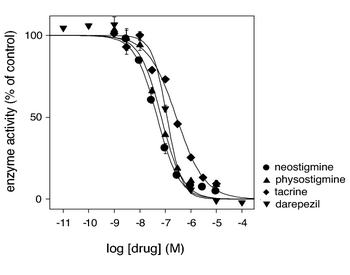
Acetylcholinesterase (ACES, AchE, EC 3.1.1.7)) terminates the action of acetylcholine (ACh) at the junctions of various cholinergic nerve endings with their effector organs or postsynaptic sites. Compounds that inhibit AChE are called anticholinesterase agents and are used to ameliorate the symptoms of myesthenia gravis, lower intraocular pressure in glaucoma and for possible treatment of dementia through increase of ACh concentration in the brain. Anticholinesterases may also cause salivation, meiosis, increase in gastrointestinal motility, skeletal muscle paralysis, respiratory arrest and cardiovascular collapse. These agents are also used as insecticides and pesticides for agricultural purposes and vector control.
Family:
Enzyme
Sub Family:
Acetylcholine turnover
Protein Name:
AChE
Uniprot Number:
P22303
Protein Aliases:
Yt blood group
Gene Name:
ACHE
Gene ID:
43
Accession Number:
NM_015831
Organism:
Human
Construct Details:
Recombinant
Assay Information
Assay Type:
Biochemical
Assay Sub Type:
Enzymatic
Functional Mode:
Antagonist
Detection Method:
Spectrophotometric
Testing Information
Substrate:
Acetylthiocholine (400 µM)
Incubation:
30 min at RT
Control Inhibitor:
galanthamine
Test Concentration / Dose:
Eurofins will provide IC/EC50 calculation if 5 or more concentrations are selected.
Test Sample Requirements:
Minimum for 1) Screen: 60 µl of 10 mM stock -OR- 1 mg (pre-weighed) for 10µM final testing. 2) Dose Response: 90 µl of 10 mM stock -OR- 1 mg (pre-weighed) for a top concentration at 10 µM.
Minimum Order Quantity:
2
Turnaround Time
Standard:
10 Business Days
Reference Compound Data
Clinical Relevance
Therapeutic Area:
CNS/Addiction/Pain
Additional Information
Brand:
LeadHunter
Testing Location:
France - Celle L'Evescault
RELATED SOLUTIONS
BioPrint SafetyScreen Panel - FR
Item: P22-p
SafetyScreen44 Panel - FR
Item: P270
SafetyScreen87 Panel - FR
Item: P342
Diversity LeadHunter Panel - FR
Item: P9
SafetyScreen Functional Panel - FR
Item: P347
CNS SafetyScreen panel - FR
Item: P411
Large Alzheimer Disease Discovery LeadHunter Panel - FR
Item: P426
SafetyScreen18 Core Panel - FR
Item: P447
SafetyScreen77 Core Extended Panel - FR
Item: P456
SafetyScreen77 Functional Core Extended Panel - FR
Item: P460-EU
SafetyScreen18 Functional Core Panel - FR
Item: P452-EU
Questions? Contact Us
You can easily get in touch with a Eurofins Discovery Expert or get help from our Customer Service team. Reach out with questions, or to discuss your specific discovery challenges.
